

Heating a Conservatory: What Works Without Sky-High Bills (and What to Avoid)
A conservatory should be a room we can enjoy for far more than a handful of warm days each year. Yet when temperatures fall, homeowners can quickly discover that heating a highly glazed room is different from heating a conventional lounge or dining room. Turning up the heating might make the space warmer temporarily, but without the right glazing, roof and heating strategy, a considerable amount of that heat can escape.
From our experience, the best way to heat a conservatory efficiently is to consider the room as a complete system. The heating appliance matters, but so do the glass, frames, roof, floor, ventilation and way the conservatory connects to the main house. Improving these areas can reduce heat loss before we spend more money producing additional heat.
There is no single heating method that will be right for every conservatory. A small, well-insulated room used occasionally has very different requirements from a large conservatory used as an everyday dining or family space. In this guide, we explain the main options for heating a conservatory, where each approach works well, and which common mistakes can lead to unnecessarily high energy bills.
Why Can Conservatories Be Difficult to Heat?
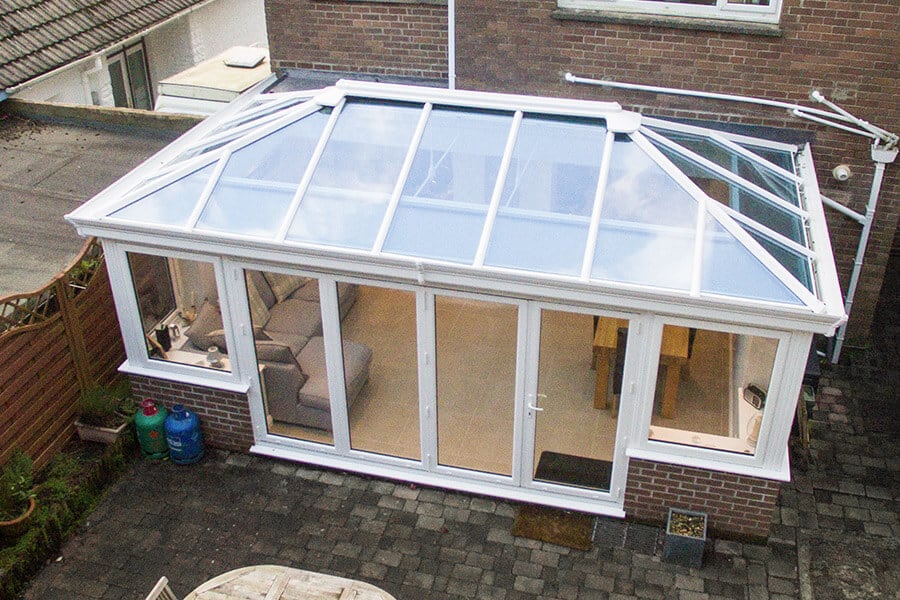
Traditional conservatories contain a much higher proportion of glazing than conventional rooms. Glass allows us to create the bright, garden-facing environment that makes a conservatory appealing, but its thermal characteristics differ from those of an insulated solid wall.
Older conservatories can be particularly challenging. Ageing glazing, inefficient frames and older polycarbonate or glass roofing systems may allow considerably more heat to escape than modern alternatives. Draughts around doors, opening windows and seals can make the problem more noticeable.
The orientation of the room matters too. A conservatory receiving strong sunlight may warm naturally during part of the day before cooling quickly once the sun disappears. A shaded or north-facing room may receive much less useful solar gain during winter.
This is why simply asking which heater is cheapest does not tell us enough. Before choosing a heating system, we need to understand how efficiently the conservatory retains the heat being produced.
Improve Heat Retention Before Adding More Heating
When homeowners tell us that their conservatory costs too much to heat, our first thought is not necessarily that they need a larger radiator. If heat is escaping rapidly through inefficient glazing, an ageing roof or poorly sealed frames, increasing the heating output can mean paying to replace heat almost as quickly as it disappears.
Check the Conservatory Glazing and Frames
Modern energy-efficient glazing can make an important difference to comfort. Double-glazed units use two panes separated by a sealed cavity to reduce heat transfer compared with single glazing. Modern frame systems can further improve the overall thermal performance of the structure.
The Energy Saving Trust advises that energy-efficient glazing can reduce heat loss through windows and help make a property more comfortable. Although conservatories have particular construction and usage characteristics, the same basic principle applies: reducing heat transfer through the glazed elements means less energy is required to maintain a comfortable temperature.
It is worth checking the condition of existing units as well. Failed seals, noticeable draughts and condensation trapped between panes can indicate that part of the installation is no longer performing as intended. In some cases, upgrading the existing conservatory can be a more sensible starting point than buying additional portable heaters.
Do Not Forget the Conservatory Roof
The roof represents a substantial part of a conservatory’s external envelope. An older roof can therefore have a major effect on how the room feels throughout the year.
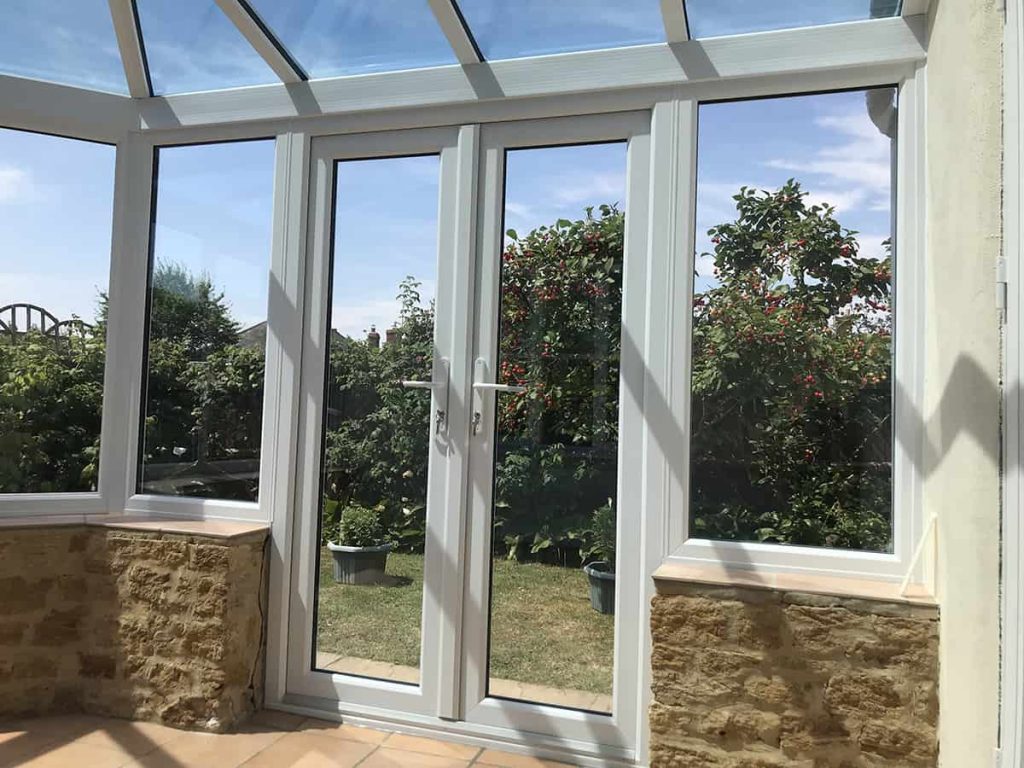
A suitable replacement roof can improve thermal performance and make internal temperatures more manageable. Solid or highly insulated roofing options can be particularly useful where the objective is to create a room used regularly through winter, although homeowners should consider how changing the roof affects natural light and the character of the space.
From our experience, roof improvements can change how a conservatory is used. Rather than repeatedly compensating for poor heat retention with additional heating, improving the structure addresses part of the underlying problem.
Look for Draughts Without Blocking Ventilation
Draught-proofing and ventilation are different things. Unwanted gaps around poorly fitting doors and deteriorated seals can allow heated air to escape, while planned ventilation helps maintain indoor air quality and manage moisture.
We therefore would not recommend indiscriminately sealing every possible route for air movement. Existing ventilation should continue to work as intended, particularly where the conservatory forms part of a wider alteration to the house.
The aim is to address unintended heat loss while retaining appropriate ventilation. This balance can improve comfort without creating unnecessary condensation or indoor air quality problems.
What Is the Best Way to Heat a Conservatory?
Once the room itself is performing reasonably well, we can consider the heating source. The best choice depends on how frequently the conservatory is used, how quickly it needs to warm up and whether it is thermally separated from the rest of the home.
Electric Radiators
Electric radiators can be practical where a conservatory is used intermittently. They are relatively straightforward to control, can warm a specific room without heating the entire house and do not necessarily require alterations to an existing wet central-heating system.
Their weakness is running cost. Electricity bought from the grid typically costs more per unit of energy than mains gas, although tariffs and heating systems vary. Using an electric radiator for short periods in a small, thermally efficient conservatory may be reasonable; relying on several portable electric heaters for long periods in an inefficient room is a very different proposition.
Good controls are particularly useful here. A thermostat and timer allow us to heat the room when it is actually needed rather than leaving an appliance running continuously.
Underfloor Heating
Underfloor heating is appealing because it provides heat across the floor rather than occupying wall space that may already be limited by glazing. It can create an even feeling of warmth and is particularly attractive when a conservatory is being newly constructed or extensively refurbished.
There are two broad approaches: electric systems and water-based systems. Electric systems can be simpler to install, particularly during flooring work, but running costs need careful consideration. Water-based underfloor heating can work efficiently in suitable circumstances but involves a more substantial installation.
Floor construction and insulation are important whichever system is chosen. Installing heating beneath a poorly insulated floor can reduce the benefit because some energy is directed where we do not want it. For that reason, underfloor heating is best considered as part of the complete floor specification rather than as an isolated product.
Extending Central Heating
Connecting a conservatory to a home’s existing heating can sound like the obvious solution, but this is an area where we recommend getting appropriate professional advice before making alterations.
Building Regulations can affect how a conservatory is separated from the main dwelling and how its heating is controlled. The specific requirements depend on the construction and circumstances of the project. The Government’s Approved Documents and the Planning Portal provide useful starting points, while a competent heating professional or building control body can advise on an individual installation.
Even where an extension to the heating system is appropriate, simply adding a radiator does not guarantee efficient results. The heating system needs to be capable of serving the additional demand, and the conservatory itself still needs reasonable thermal performance.
Air-to-Air Heat Pumps
An air-to-air heat pump can provide both heating and cooling, which can be useful in a conservatory where winter cold and summer overheating are both considerations. Instead of creating heat directly from electrical resistance, a heat pump moves heat, allowing suitable systems to deliver more heat energy than the electrical energy they consume.
Installation cost is higher than buying a portable electric heater, so this approach tends to make more sense where the conservatory is used frequently. Correct sizing and professional installation are important, as is understanding how the unit will operate in the particular room.
Noise, unit positioning and appearance should also be considered. For a conservatory that functions as an everyday living space, however, the ability to provide controlled heating and cooling can be useful.
Heating Methods We Would Approach with Caution
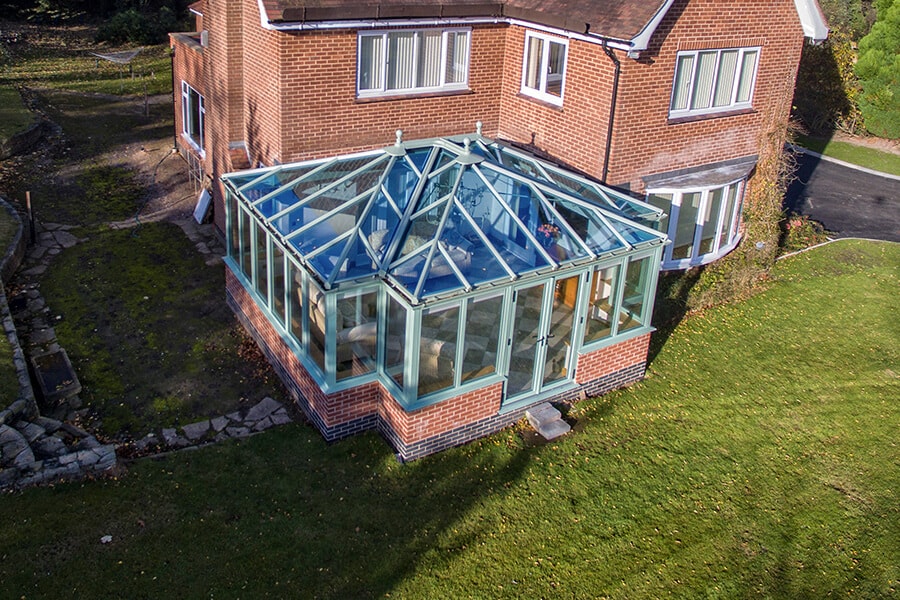
Some methods appear inexpensive because the initial purchase price is low, but that does not necessarily make them economical over a winter.
Portable fan heaters are a good example. They can provide rapid local heat and may be useful for occasional short periods, but using them for hours at a time can become expensive. They can also create an uneven experience where the air immediately around the appliance feels warm while other parts of the conservatory remain cold.
We would also avoid buying an oversized heater in an attempt to compensate for an inefficient conservatory. More heating capacity does not address draughts, ageing glazing or poor roof insulation. It simply gives us the ability to put heat into the room more quickly.
Unvented fuel-burning portable heaters require particular caution. Combustion can introduce moisture and pollutants into indoor air, and inappropriate appliances can create serious safety risks. Carbon monoxide is especially dangerous because it cannot be seen or smelled. Where combustion appliances are involved, following manufacturer instructions and appropriate safety guidance is essential.
Finally, we would avoid relying on heating alone to address condensation. Warmth can help keep surfaces above their dew point, but moisture still needs an appropriate route out of the building. Heating and ventilation have different jobs, and both need to be considered.
How Can We Heat a Conservatory Without High Energy Bills?
Efficient conservatory heating is largely about matching energy use to how the room is actually used. There is little benefit in maintaining living-room temperatures throughout the day if the conservatory is occupied for only a couple of hours in the evening.
Thermostatic control is therefore one of the simplest improvements. Rather than running heating continuously, we can set the room to reach a suitable temperature shortly before it is required. Smart controls may provide further flexibility, although the usefulness of any control system depends on how consistently it is used.
Curtains and suitable blinds can help with comfort, particularly during the evening, but they should be used sensibly. They are not substitutes for thermally efficient glazing, and blocking ventilation or trapping persistent condensation against windows can create other problems.
It also helps to use solar gain intelligently. On bright winter days, allowing sunlight into the room can provide useful free warmth. Once daylight fades, suitable window coverings can make the room feel more comfortable, although the thermal benefit will vary considerably depending on the product.
Above all, we recommend reducing unnecessary heat loss before increasing heating demand. Improving an ageing conservatory can make every subsequent unit of heating energy work harder for the household.
Should You Upgrade an Older Conservatory Instead?
There comes a point where repeatedly heating an inefficient conservatory stops making financial sense. If the room has old glazing, deteriorated frames, a poorly performing roof and persistent draughts, several individual fixes can add up without producing the result homeowners want.
An upgrade can address several of these issues together. Modern glazing, improved frame technology and more thermally efficient roof options can help create a space that is easier to use across the seasons. The appropriate solution depends on the condition and construction of the existing conservatory, so an assessment is preferable to assuming complete replacement is always required.
This is an area where our experience with home improvements is particularly useful. We can look beyond the heater itself and consider why the room is difficult to keep comfortable. A conservatory that retains heat effectively gives homeowners much more flexibility over the heating method they choose.
If you’re considering improvements elsewhere at the same time, our home improvement options provide a useful overview of the different ways glazing, doors and other elements can contribute to the performance and appearance of a property.
Heating Your Conservatory Sensibly
The cheapest conservatory to heat is generally one that does not lose warmth unnecessarily. Modern glazing, effective frames, an appropriate roof and attention to unwanted draughts can all reduce the amount of energy required before we even consider the heating appliance.
For occasional use, a controllable electric radiator may provide the simplicity homeowners need. Underfloor heating can work particularly well when incorporated into a wider refurbishment, while an appropriately specified heat pump may suit a conservatory used as a regular living space. Extending an existing central-heating system requires more careful consideration of the building and regulatory requirements.
From our experience, the biggest mistake is trying to solve poor thermal performance by continually adding more heat. Understanding how the conservatory is built, when it is used and where heat is being lost gives us a much stronger starting point. With the right combination of insulation, glazing, controls and heating, a conservatory can remain useful through the colder months without allowing energy consumption to get out of hand.
Frequently Asked Questions
What is the cheapest way to heat a conservatory?
There is no single cheapest method because costs depend on the size and thermal performance of the conservatory, the energy tariff and how frequently the room is used. For occasional use, targeted heating with effective thermostatic controls can avoid heating an empty room for long periods. For regular use, improving the glazing, roof and draught resistance may reduce costs more effectively than simply changing the heater. We recommend considering heat retention and heating together.
Are electric radiators good for conservatories?
Electric radiators can work well in smaller conservatories or rooms used for limited periods because they are easy to control independently. However, prolonged use can be expensive depending on your electricity tariff. A timer and thermostat can help prevent unnecessary consumption. Their suitability ultimately depends on how often the room needs heating and how effectively it retains warmth.
Can I put a radiator in my conservatory?
It may be possible, but connecting a conservatory to an existing central-heating system needs careful consideration. Building Regulations and the way the conservatory is separated from the main house can affect the appropriate arrangement. We recommend checking the requirements applicable to your property and using a competent heating professional. An additional radiator should also be properly sized rather than chosen by guesswork.
Is underfloor heating worth having in a conservatory?
Underfloor heating can be an attractive option, particularly during construction or a substantial refurbishment. It avoids taking up wall space and can provide evenly distributed warmth. Its effectiveness depends heavily on the floor build-up and insulation, while running costs vary between electric and water-based systems. We would therefore consider it as part of the overall conservatory specification rather than choosing it independently.
Should I leave conservatory heating on all winter?
Heating an unused conservatory continuously to normal living-room temperatures can consume unnecessary energy. The better approach depends on the property, heating system and how frequently the room is occupied. Appropriate thermostatic and timed controls can allow the room to be heated around actual use. Any minimum temperature requirements associated with the property or its systems should still be taken into account.
Will replacing my conservatory roof make it warmer?
A thermally efficient replacement roof can help reduce heat transfer and make an older conservatory easier to keep comfortable. The improvement will depend on the existing roof and the specification of its replacement. Glazing, frames, flooring and draughts can still influence overall performance, so we prefer to consider all parts of the structure together. A professional assessment can identify which improvements are likely to make the greatest difference.