
Condensation on Bifold Doors: What’s Normal and What Isn’t
Condensation on bifold doors is something we’re asked about all the time, especially when the doors are relatively new and have been a major investment. It can be unsettling to wake up to misted‑over glass or droplets on the frames and wonder whether there’s a fault with the doors or the installation. From our experience working with aluminium bifold doors day in, day out, we know that some condensation is completely normal, while other patterns of moisture are a clear sign that something needs attention.
When we visit customers’ homes, we often find the doors themselves are doing their job very well – keeping the warmth in and the cold out – and it’s the combination of indoor humidity and ventilation that is really driving the condensation. The tricky part is that bifold doors tend to show moisture before other windows do, simply because they are such a large expanse of glass and aluminium. In this guide, we’ll walk you through what causes condensation on bifold doors, what counts as normal, what doesn’t, how trickle vents come into play, and the practical steps you can take to keep things under control.
Our aim is to share the same practical, experience‑based advice we give our own customers. That way, you can tell the difference between harmless seasonal misting and early warning signs of a failed sealed unit, poor ventilation or an installation issue – and know when it’s time to speak to a bifold door specialist for tailored help.
What causes condensation on bifold doors?
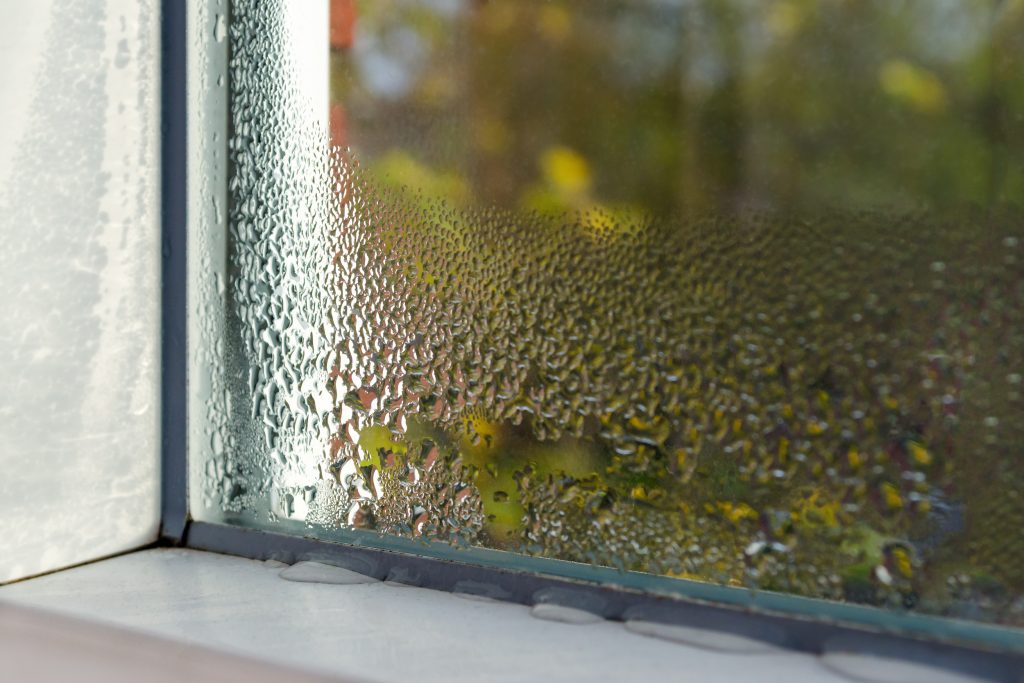
Condensation appears whenever warm, moist air meets a cooler surface and can’t hold all of its water vapour. In the home, that moisture comes from everyday living: cooking, boiling the kettle, showers and baths, drying clothes indoors, houseplants and even breathing. If that warm, humid air can’t escape, it looks for the coldest surfaces to turn back into water, and large panes of glass are usually at the top of the list.
Bifold doors are especially prone to visible condensation because they typically span a whole wall, often facing the garden. Overnight, the glass and aluminium cool down in line with the outside temperature, so first thing in the morning they can be several degrees cooler than the air in the room. As soon as you start moving around, making tea or turning the heating on, that moisture‑laden air hits the cold glass and tiny droplets form. You’ll often see this earlier and more dramatically on bifold doors than on smaller windows.
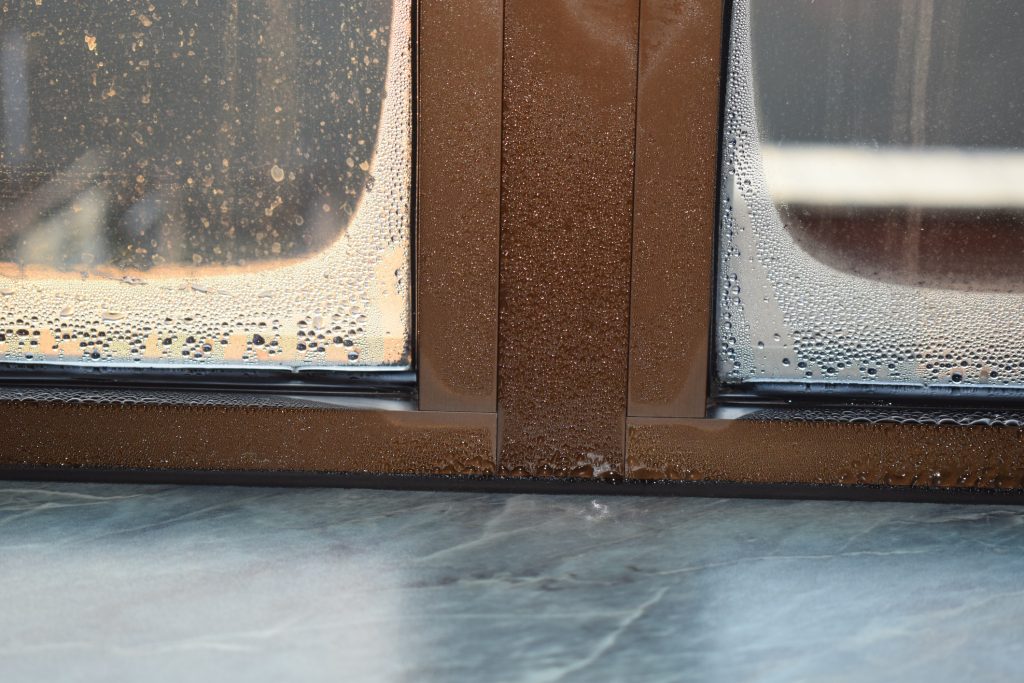
With aluminium bifold doors, the frames can also influence where condensation appears. Modern systems use thermally broken aluminium sections with an insulating barrier inside, which dramatically improves performance compared with older aluminium frames. However, those frame elements can still be slightly cooler than the surrounding plaster and furnishings, so you may notice beads of moisture along the bottom rails, beads and hinges before you see it elsewhere. That doesn’t automatically mean the doors are faulty; it usually means the room air is simply carrying a lot of moisture.
How temperature and humidity create condensation
The two key ingredients for condensation are temperature and humidity. Warm air holds more moisture than cold air, so when warm, humid air cools down against a cold surface, it reaches “dew point” and releases the excess as liquid water. The greater the temperature difference between your indoor air and the surface of the glass or frame, the more likely you are to see condensation.
If your home is well sealed and heavily insulated, moisture has fewer places to escape, and humidity can build quickly. This is why we often see more condensation on bifold doors in modern open‑plan spaces where there’s lots of cooking, socialising and day‑to‑day activity, but not always enough background ventilation. In those homes, the solution usually lies in better moisture control and airflow rather than changing the doors.
Condensation on bifold doors: what’s considered normal?
Some condensation patterns are completely expected and nothing to worry about. The most common is a misty film or fine droplets on the outside of the glass on cool mornings. This happens when the outer surface of the glass is colder than the surrounding air, and it’s actually a sign of good insulation – the warmth from inside isn’t leaking out enough to warm the outer pane. It usually clears by mid‑morning as the sun hits the glass or the air temperature rises.
Internally, a light layer of condensation on the glass or lower parts of the frame on cold mornings can also be normal, especially in kitchens, dining rooms and open‑plan spaces. If you can wipe it away easily and it disappears once the heating comes on and you open a window or trickle vent, it’s unlikely to be a cause for concern. We see this kind of temporary condensation most often after evenings of cooking, entertaining or drying clothes indoors.
It’s also normal to see condensation appear more on your bifold doors than on other windows. Because the bifolds are usually the largest and often the coldest glazed area, they simply show the moisture first. As long as that moisture is seasonal, light, and clears reasonably quickly with normal heating and ventilation, your doors are probably performing as they should.
When a quick wipe and ventilation are enough
If condensation only appears at certain times – cold winter mornings, after particularly steamy showers or heavy cooking – and responds quickly to simple measures, you’re likely in the “normal” range. A quick wipe with a cloth or squeegee, combined with opening a window, using extractor fans and keeping trickle vents open, is usually all that’s needed.
In our experience, customers who adopt small daily habits – such as using cooker hoods, keeping bathroom doors closed during showers, and ventilating the room after drying clothes – see a noticeable reduction in condensation, even without any changes to the doors themselves.
When condensation on bifold doors isn’t normal
There are situations where condensation on bifold doors points to a problem that goes beyond everyday humidity. One clear warning sign is condensation between the panes of glass. If you see misting or water droplets inside the double‑glazed unit that you can’t wipe off, it means the sealed unit has failed and moisture has entered the cavity. In that case, the glass unit will usually need to be replaced.
Another concern is heavy, persistent condensation on the inside of the glass that remains throughout the day, even when you’ve heated and ventilated the room. If your bifold doors are constantly streaming with water, while other windows are relatively clear, it could indicate that the internal surface is colder than it should be or that humidity in that particular space is very high. Over time, this can lead to mould on seals and surrounding plaster, so it’s worth investigating sooner rather than later.
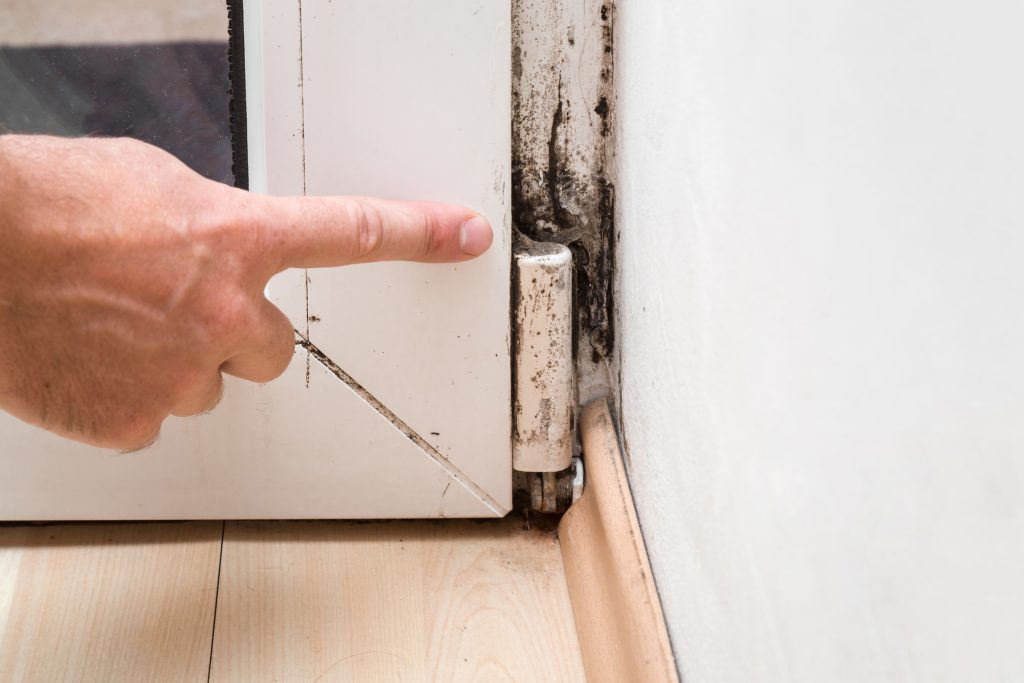
Pooling water on the cill or floor, damp patches at the corners of the frame, or peeling paint and black mould around the reveal are also red flags. These signs can point to poor drainage at the threshold, failed external seals or issues with how the frame was fitted. If you’re seeing this kind of damage, it’s important to have the doors inspected by someone with experience in bifold installations.
Damp, mould and failed sealed units
If condensation is left sitting on frames and plaster for long periods, it can create the conditions for mould growth and damage to finishes. Black spots on silicone, staining on plaster or bubbling paintwork around the door opening usually tell us that moisture has been present for some time. This might be due to persistent high humidity, leaks around the frame, or both.
Condensation between panes is different. It doesn’t damage the structure around the door, but it does spoil your view and indicates a failed glass unit. The only reliable fix is to replace that unit, and it’s worth doing promptly, especially if your bifolds are under guarantee.
Aluminium bifold door condensation and trickle vents
Aluminium bifold doors are now designed with thermal breaks inside the frame, so the inner and outer parts of the aluminium are separated by an insulating barrier. This greatly improves their performance compared with older aluminium systems and helps keep internal surfaces warmer. However, even the best thermally broken frame can’t prevent condensation if the room air is very humid and there’s nowhere for that moisture to go.
This is where trickle vents on bifold doors become useful. Trickle vents are small, controllable inlets, usually located at the top of the frame or in the head extension above the doors. When open, they allow a constant, gentle flow of fresh air into the room and let moist air escape. They’re not designed to replace opening the doors fully, but they provide important background ventilation, especially in winter when you’re less likely to have windows open.
In our own installations, we often recommend leaving trickle vents slightly open most of the time during the colder months. Combined with effective kitchen and bathroom extractor fans, this helps maintain healthy humidity levels so that warm air doesn’t immediately deposit moisture on your bifold doors. If your doors don’t have trickle vents, it’s worth checking what other ventilation is available nearby – for example, vents in adjacent windows or walls – and using those consistently.
Getting the best out of trickle vents
To see the benefits from trickle vents, they need to be part of a wider routine rather than an afterthought. Keeping them closed most of the time and opening them only when condensation appears is less effective than leaving them open to prevent moisture building up in the first place. We advise customers to think of trickle vents as “always on, occasionally closed” rather than the other way round.
If you’re unsure whether your trickle vents are doing enough, a simple test is to monitor how quickly condensation clears when they’re open compared with when they’re closed, keeping everything else the same. If you see a consistent improvement, it’s a good sign that background ventilation is part of the solution for your home.
Practical ways to reduce condensation on bifold doors
Managing condensation on bifold doors comes down to three main principles: controlling moisture, providing ventilation and keeping internal surfaces reasonably warm. In everyday terms, that means:
- Using kitchen extractor fans when cooking and for a while afterwards, especially when boiling or frying.
- Switching on bathroom fans during and after baths and showers, and keeping the door closed until the steam has cleared.
- Avoiding drying clothes directly in front of your bifold doors; if you need to dry indoors, use a well‑ventilated room or consider a dehumidifier.
- Maintaining a steady background temperature rather than letting rooms get very cold and then heating them rapidly, which encourages condensation.
- Keeping trickle vents open and, when weather allows, giving the room a regular “airing” by opening windows or the bifolds themselves for a short period.
When we install aluminium bifold doors, we ensure the system itself is working in your favour: thermally broken frames, high‑performance glazing, well‑sealed joints and correctly formed thresholds and drainage. That way, you’re starting from a solid base, and the daily moisture‑management habits you adopt can make their full impact.
If you’re worried that the condensation you’re seeing isn’t normal, or if you’ve spotted misting between the panes, damp patches or mould, the safest option is to have your doors checked by a specialist who understands bifold systems and their installation.
Speak to a bifold door specialist for tailored advice or to arrange a survey:https://www.majesticdesigns.co.uk/contact-us/
You can also explore our aluminium bifold door styles, specifications and options here:https://www.majesticdesigns.co.uk/doors/bifold-doors/
FAQs
Is condensation on bifold doors normal?
Yes, light condensation on the inside or outside of bifold doors is normal in colder weather, especially first thing in the morning or after cooking and showers, as long as it clears reasonably quickly with heating and ventilation.
Why do my aluminium bifold doors get more condensation than my windows?
Bifold doors have large glass areas and aluminium frames that sit close to external temperatures, so they’re often the first surfaces where warm, moist indoor air cools down enough to release water droplets.
What does condensation between the panes of my bifold doors mean?
Condensation between panes indicates a failed sealed unit; moisture has entered the cavity and cannot be wiped away from either side. The only reliable fix is to replace the affected glass unit.
Will trickle vents on bifold doors stop condensation completely?
Trickle vents help by providing continuous background ventilation, but they work best alongside extractor fans, sensible heating and good everyday moisture control. They reduce condensation rather than eliminating it in every situation.
When should I call a bifold door specialist about condensation?
You should seek expert advice if condensation is heavy and persistent, forms puddles on sills or floors, appears between the glass panes, or is accompanied by damp, mould or damaged finishes around the frame.